Celebrating the USA’s 250th Anniversary in its 13 Original Colonies
By Su-Jit Lin, ALG Vacations®
A quarter millenium of pursuing life, liberty, and happiness – an impressive milestone for a “great experiment.” In the past 250 years, the United States has become an international power, one of the most influential and wealthy nations on the planet, and the foundation for democracies everywhere. With such tremendous reach, both geographically and globally, it’s easy to forget that the little rebellion that changed the world started with just a baker’s dozen nascent states lining only a fraction of our East Coast.
For those who want to commemorate the occasion with experiential reflection, better understand our national roots, or just want a great reason to explore America the Beautiful as it was two and a half centuries ago, here’s what to see and what to eat where it all started.
The New England Colonies
If there’s anywhere to start your journey through the American Revolution, it’s the region independence began. It was Rhode Island that was the first to renounce its allegiance to King George, soon joined by neighbors in New Hampshire, Connecticut, and of course, Massachusetts.
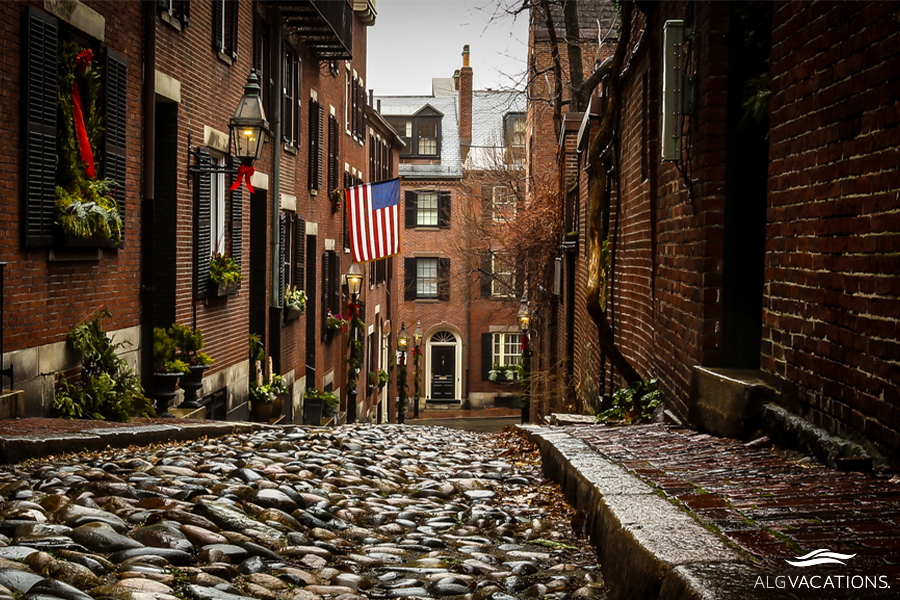
In Providence, walk down Benefit Street, nicknamed the Mile of History, to experience colonial architecture and the comingling of civic and educational institutions with private residences that made it all the easier for a community to come together. Then pop over to fellow small state, New Hampshire, to downtown Portsmouth to continue your architectural tour. These 17th century homes reflect how the first Americans lived, and touring the strip lets you end the day with the timeless dinner view overlooking the same coastal vistas the founding settlers back in 1623 experienced.
Connecticut’s Revolutionary War sites are a bit more somber. In Redding, Putnam Memorial State Park is a must-visit. Reconstructed log buildings, preserved trails, and an interpretive museum for this 1778 winter encampment area turns the past into present for visitors. Similarly, there are taverns of that era across the state – the Griswold Inn in Essex, Marlborough Tavern, and Abigail’s Grille & Wine Bar in Simsbury are good stops. Even better, sync up your visit with a Revolutionary War reenactment at participating parks.
But if you must choose one state only, make it Massachusetts. Boston is rightly famous for the most historical tea party of all time and as the hometown of legendary players like Samuel Adams, John Hancock, Paul Revere, and more. Follow the Freedom Trail for a deep dive, or rent a car to visit famed battle towns Lexington and Concord, just 30 minutes away.
Heritage Eats: Coastal locations made these colonies critically important to our independence, but also, wonderful to eat in. Have fried whole belly clams, oysters, clam chowders (New England or Rhode Island-style!), calamari tossed with cherry peppers, and lobster rolls–cold with mayo in Massachusetts and hot with butter in Connecticut–at every opportunity.
Warm the belly with baked beans and roast beef sandwiches in Boston; chicken tenders where they were invented (New Hampshire); and apple cider doughnuts if you’re lucky enough to plan to be in New England in the fall. And if you’re eating across Connecticut, try New Haven white clam pizza by the coast, steamed cheeseburgers inland, or hamburgers in their original historic form – onion, tomato, and white toast, no ketchup.
The Middle Colonies
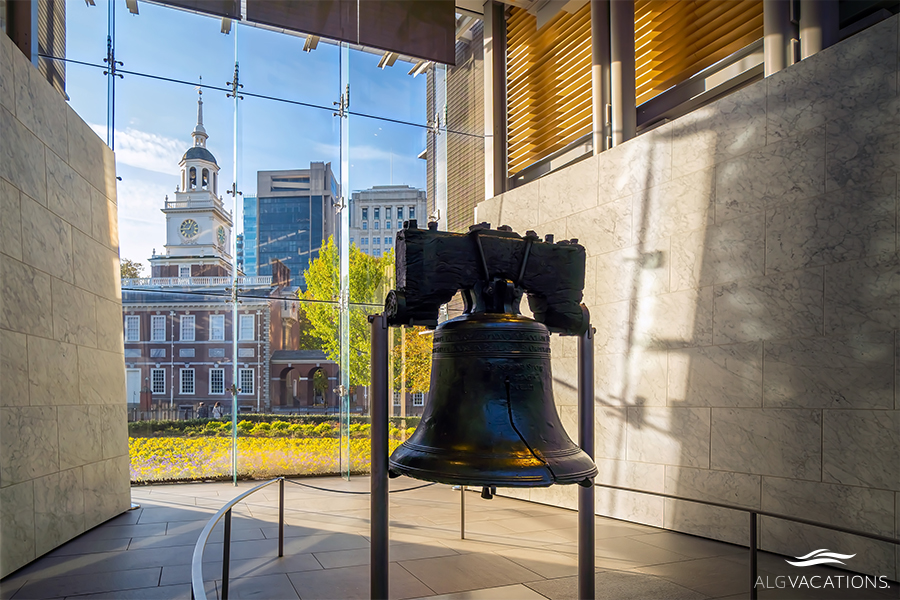
New England (rightfully) gets a lot of glory for their ideological contributions to this time in history, but Pennsylvania’s Philadelphia, the Cradle of Liberty, is no slouch. The Declaration of Independence and U.S. Constitution were drafted and signed at UNESCO World Heritage Site Independence Hall near the famed Liberty Bell. The Museum of the American Revolution provides an even deeper look at these events, making Philly a key part of any heritage tour.
For those traveling by road, add a stop in York, PA, too. Its colonial village served as the U.S.’s temporary capital and was where the Articles of Confederation were first adopted.
Meanwhile, New York, New Jersey, and Delaware bear the scars of their physical contributions.
New Jersey is singled out as the Crossroads of the Revolution, boasting sites like George Washington’s key military headquarters in what’s now known as Morristown National Historic Park, and important battles such as the ones in Trenton and Princeton that created turning points in the war.
Across the Hudson River is Manhattan, what most people think when they imagine New York. George Washington certainly did, choosing the still-in-operation Fraunces Tavern to be the place to famously bid goodbye to his officers in 1783. Federal Hall National Memorial’s service as the nation’s first capital and home to the inaugural Congress and first Supreme Court certainly doesn’t detract from the city’s significance.
But there’s so much more to what’s actually a massive state. There’s where the turning point of the war occurred (Saratoga) and where the largest battle of the war was fought (in Brooklyn). And in the capital, upstate in Albany, the Schuyler Mansion State Historic Site offers a privileged peek at how the fathers of our nations lived and gathered for strategy and social affairs.
For something even more immersive, Jessop’s Tavern in Delaware, offers colonial-inspired fare in historic Old New Castle. This city is where the largest concentration of The First State’s Revolutionary War sites are located.
Heritage Eats: Outside of the abovementioned venues, eating as the colonists did is a bit more challenging when the allure of this area’s cultural melting pots waft so fragrantly. You know to get pizza, bagels, and American Italian food, sandwiches from Jewish delis and bodegas, and to go to a diner. In New Jersey, you’ll want your egg sandwich with pork roll instead of bacon, and Disco Fries at night. In Philly, a cheese steak or roast pork sandwich with provolone and broccoli rabe is essential. Upstate in New York, Buffalo wings and Rochester’s Garbage Plates are regional prides.
But to tap into a historical palate, seek out Dutch/German-influenced dishes like pot pies, stews, apple dumplings, pierogies, and plenty of breads. And in Delaware, look to the sea, where blue crabs and raw bars are never a miss.
The Southern Colonies
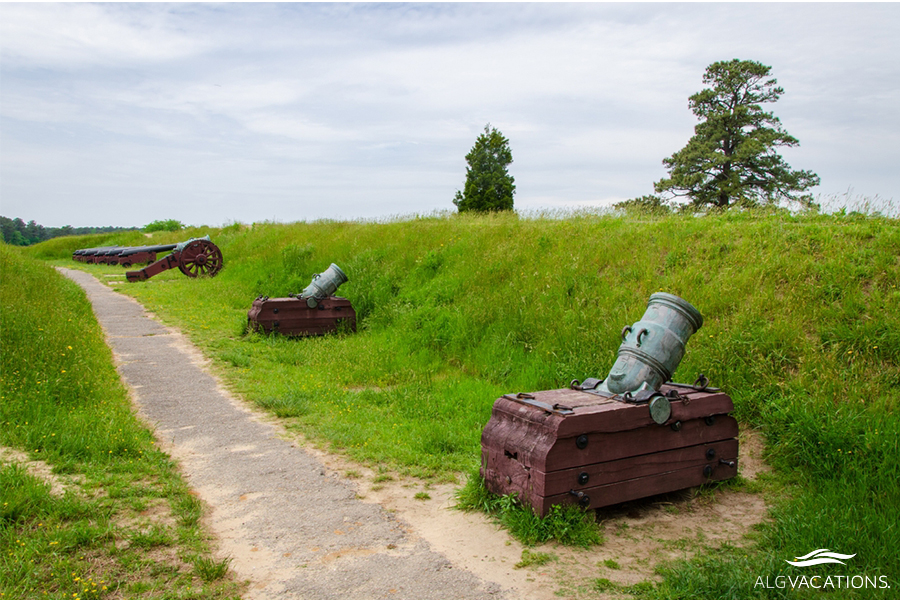
With the concentration of historic sites and events occurring in the northern colonies, it’s easy to forget that it was the American South that bore the brunt of the battles, with intense and prolonged fighting from Maryland to Virginia to North and South Carolina and the tip of Georgia.
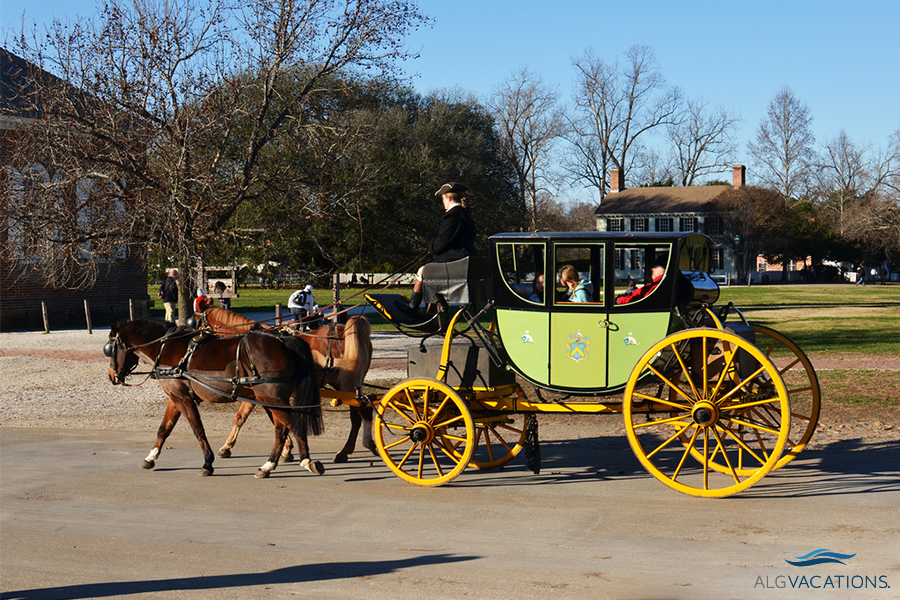
To experience colonial life, there’s perhaps nowhere as famous as Virginia’s colonial Williamsburg, the world’s largest living history museum. Nearby, comprising the rest of the Historic Triangle, are Jamestown and Yorktown, both of which feature their own interactive reenactments, archaeological excavations, and even full-scale recreations of the original three ships that arrived in 1607.
A state over, in Maryland, St. Mary’s City also boasts a large outdoor living history museum, including a 17th century tobacco plantation and tall ship, while Annapolis’ colonial historic district and cobblestoned streets provide a look at urban life. And in Outer Banks, NC, the Roanoke Island Festival Park uses costumed interpreters to help visitors explore life as it was as far back as 1585.
A focus on the Revolutionary time period, though, narrows the list to South Carolina: Charleston for its replica ship and downtown Old Exchange and Provost Dungeon; the Camden Revolutionary War Site, host of daily demonstrations of wartime life; and Brattonsville, where over 30 structures span the nation’s early centuries across 775 acres. Additionally, it’s one of the few remaining living history sites where the lives and stories of African Americans are told through interpretations.
And if you can, add to your list Halifax, NC, where the first recommendation for independence was made. There, colonial crafts and living history activities occur regularly. Or visit Savannah, GA, whose history museum features artifacts from the war and streets offer timeless grace and beauty.
Heritage Eats: Don’t skip the chance to eat all the crab dishes you can in Maryland, from cakes to soups. Vinegary Boardwalk Fries and oysters are recommended around those parts, too. You don’t want to miss out on Lowcountry South Carolina seafood either, where Gullah-inspired dishes like sweet shrimp and grits, gumbo, and garlic crabs or fried local fish tap into the West African heritage of the region. Pair with hush puppies and have boiled peanuts and pimento cheese if you get peckish in between meals.
And of course, everyone knows how good meat is in the American South. Fried chicken is classic, especially with collard greens and cornbread, and you’ll want to try Virginia country ham in a biscuit, Pit Beef sandwiches, whole hog barbecue in various styles across the Carolinas (Lexington, Eastern/Piedmont, Carolina Gold), and Brunswick stew. Wash it down with sweet tea, then end with Smith Island cake, fudge shortbread Berger cookies, and peach and pecan pies when you can.
About ALG Vacations
ALG Vacations®, part of the Hyatt family (www.hyatt.com), is a collection of powerful and growing vacation brands widely recognized for providing the industry’s leading leisure travel experience across the world, as well as domestically in the United States. ALG Vacations is a member of the USTOA $1 Million Traveler’s Assistance Program. With more than three million passengers annually, ALG Vacations features well-established vacation brands including Apple Vacations®, Funjet Vacations®, Travel Impressions®, Blue Sky Tours®, and United Vacations®.
Related Posts




Posted in: